Volume
Three-dimensional space occupied or enclosed.
ELEMENT 04 · THREE-DIMENSIONAL VOLUME
Three-dimensional volume, or the convincing illusion of volume on a flat surface.
Actual form occupies or encloses space. Represented form uses visible depth cues so a flat image can suggest volume.
Keep the distinction clear: shape has two-dimensional area; form has or implies height, width, and depth. Smooth shading is one depth cue, not the definition of form.
ORIENTATION · ACTUAL FORM
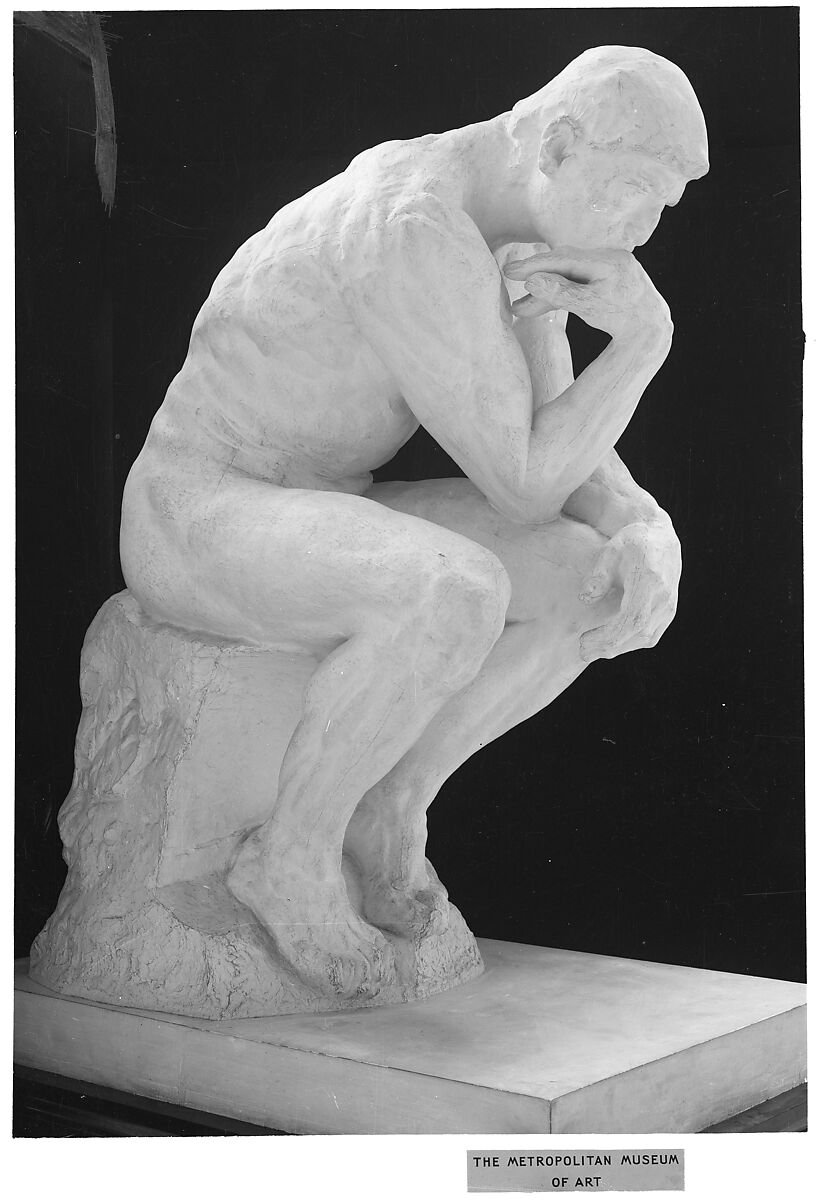
Walk around a sculpture and its outline changes. Volume, mass, void, plane, and viewpoint remain available even when a single view hides some of them.
Three-dimensional space occupied or enclosed.
The perceived solidity or weight of a form.
Open or enclosed empty space within or around form.
A flat or relatively flat surface of a form.
CONTROLLED DEMONSTRATION 01
Each pair begins with a flat shape. Added planes, overlap, contour, or value make volume plausible.
Offset edges and additional planes supply depth.
Organized value zones describe a curving surface.
An elliptical base and divided surface imply circular depth.
CONTROLLED DEMONSTRATION 02
A planar form changes direction at distinct edges. A curvilinear form changes direction gradually across its surface.
Cross-contours make that surface direction visible without relying on smooth tonal modeling.
CONTROLLED DEMONSTRATION 03
The black L-shaped front plane is geometrically identical in both states. Only the depth information changes.
VOCABULARY
Separate what physically occupies space from the visual cues that represent it.
MODELING · ONE FIXED LIGHT
This static study uses one fixed upper-left light and a slightly glossy sphere. The light-facing region transitions through halftone into the shadow side; the sphere then blocks light from reaching the ground.
Only features that this setup demonstrates clearly are labeled. Reflected light is omitted because it would require a more specific surrounding environment.
ANALYZE · ACTUAL FORM
Begin with physical evidence visible in the photograph: changing silhouette, projecting limbs, compressed joints, concave spaces, and planes catching different amounts of light.
Rights: The Met marks the object image Public Domain and permits unrestricted use of its open-access public-domain images.
View the official Met object recordCHECK UNDERSTANDING
Shape. It has area, but the image does not yet imply three-dimensional volume.
Yes. Visible planes, converging edges, overlap, and viewpoint can communicate form without smooth modeling.
The front plane stayed the same. Added recession edges, top and side planes, and occlusion supplied evidence of depth.
CONNECT